
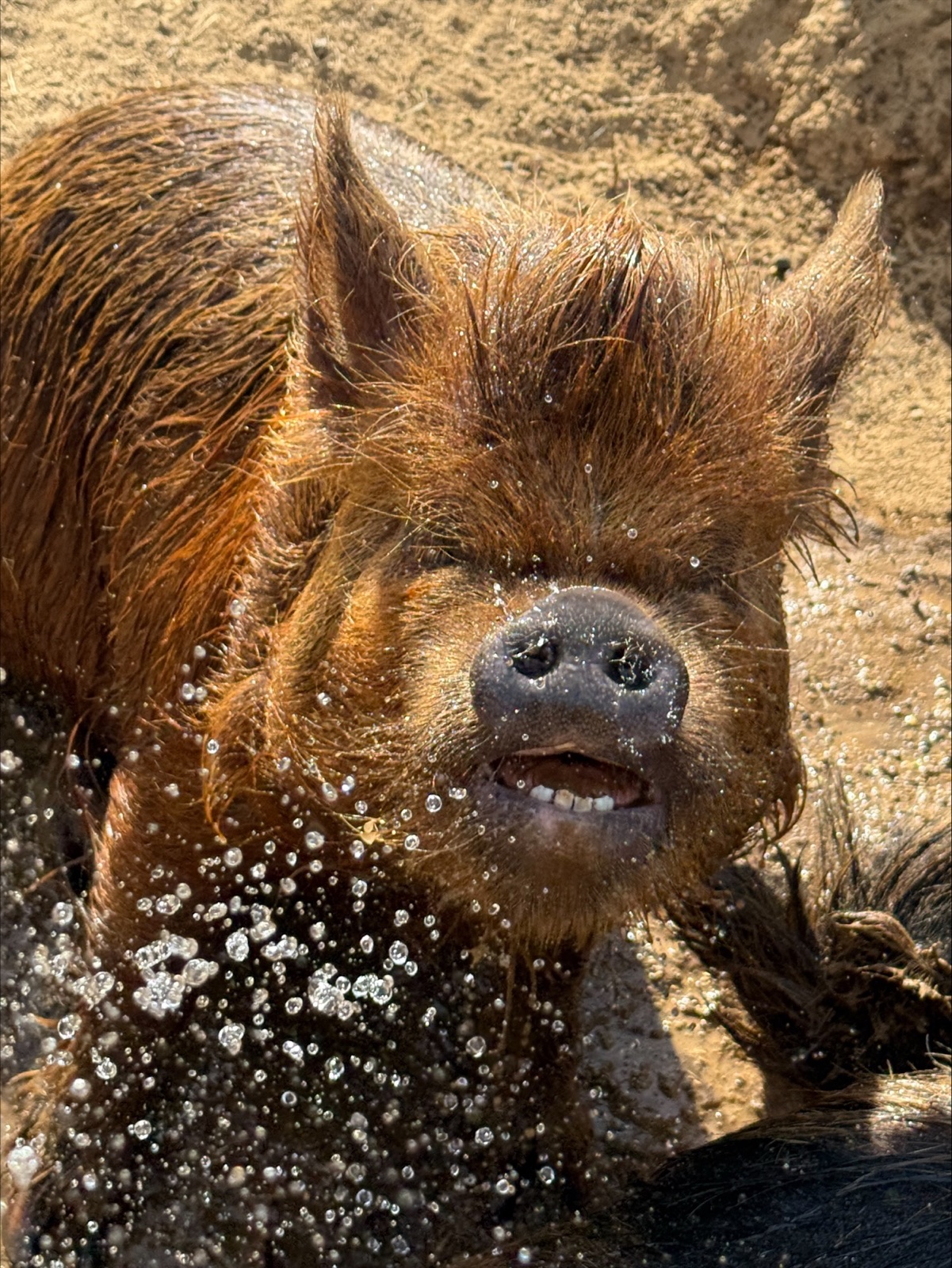
At Mockingbird Farm in Port Angeles, Washington, Kristie Wehe’s story starts with a few pigs for the family freezer and a lesson in how quickly a farm can outgrow its original plan.
Kristie and Nolan Wehe planned to raise grass-fed beef. The pigs were a side project. While looking for pork in Texas, they decided to raise some themselves and brought home three piglets.
They liked those pigs enough that eating all three became a problem. So they bought three more. Those were cute, too. Eventually they bought males to raise for meat and kept the females for breeding.
Kristie puts it this way: “We really were just going to raise pork for ourselves but ended up liking pigs so much, we wanted more of them.”
Today, Mockingbird is primarily a forested-pork business, with a limited amount of beef. The farm still reflects that early attachment to pigs. It has older animals and pets alongside those raised for meat.
When the numbers got ahead of the plan
The largest jump came when a prospective customer approached them about supplying pigs for a new local meat-delivery business. It seemed like an opportunity to grow, Kristie recalls. They began breeding all their sows.
At one point, they had 450 pigs. Two people were running the farm, one of them also working a full-time job away from it, with one part-time helper. Kristie remembers being exhausted and cranky.
Then, she says, the expected order fell through when the pigs were nearly ready for processing. She had to find other buyers quickly. The experience exposed a side of expansion that a larger customer order alone could not solve: every additional pig still needed care, space and a route to market.
The work that keeps coming
“People always tell you that farming is hard work. And it can be. But it's less how hard the work is and how constant the work is.”
For Kristie, that includes land and animal management, but also marketing, customer relationships and keeping track of inventory. Selling the pork is part of the work of raising the pigs.
Animal care also brings decisions that resist a tidy slogan. Kristie says they do not routinely use antibiotics or vaccines, but she would use either to save an animal’s life. Choosing which pigs will be raised for meat and which will stay longer can be difficult; the older pigs and pets are evidence of those choices.
The business grew from a plan to fill their own freezer. What Kristie describes now is the ongoing work of caring for animals she likes, finding customers for what the farm produces, and making decisions that two people can live with.